
Simular Raises $21.5 Million in Series A to Scale Autonomous Computer Agents

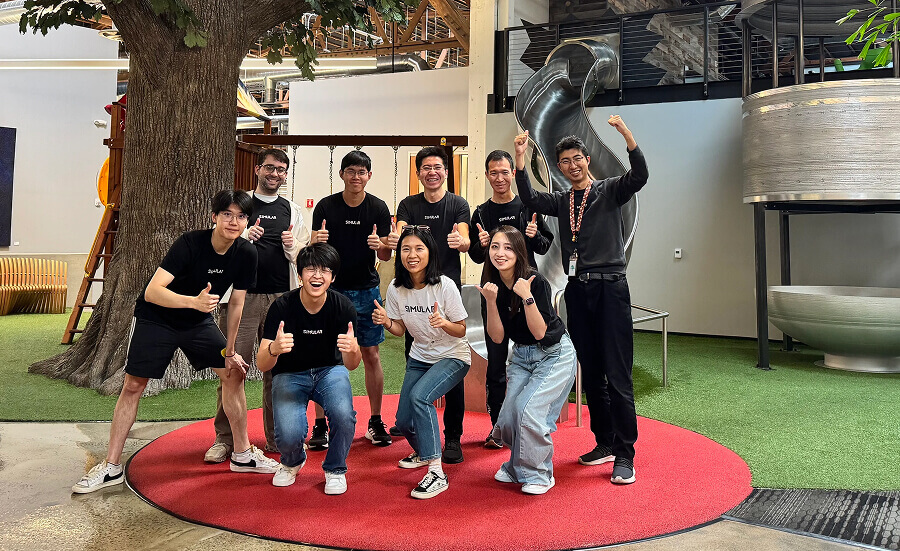
Simular, the San Francisco–area startup building autonomous computer agents that can operate software on behalf of users, has secured $21.5 million in a Series A funding round as it accelerates development of its AI‑driven platform designed to make computers act more like capable teammates than passive tools. The company, co‑founded by AI researchers Ang Li and Jiachen Yang, is turning heads in the artificial intelligence community with technology that goes beyond browser automation and interacts directly with Mac and Windows operating systems to complete complex workflows.
The Series A financing was led by Felicis Ventures, a venture capital firm known for backing bold, early‑stage companies that leverage frontier technologies to create new categories. Felicis’ lead investment signals strong confidence in Simular’s vision of autonomous agents that can perceive screens, reason about tasks and act across applications with a level of reliability approaching human performance.
Joining Felicis in the round were several strategic and long‑standing supporters of the company, including NVentures, the venture arm of NVIDIA; Basis Set Ventures, an early backer with deep ties to AI research; Flying Fish Partners, a firm focused on early‑stage tech investments; and South Park Commons, a community‑based investor group that supports technology founders. Angel investor Lenny Rachitsky also participated in the financing, adding individual backing alongside institutional capital.
Simular’s Series A follows a prior seed round that raised roughly $5 million, bringing the startup’s total capital raised to about $27 million. Investors in earlier rounds included Samsung NEXT, Xoogler Ventures and additional supporters aligned with the company’s mission to bring robust autonomous agents into everyday computing environments.
At the heart of Simular’s technology is its open agentic framework, known as Agent S, which has demonstrated promising performance on benchmarks measuring an agent’s ability to complete real computer tasks. The company’s agents are designed to perceive, reason and act across desktop software and web applications, effectively moving a mouse, clicking, typing and navigating interfaces with minimal human intervention. These autonomous agents aim to automate repetitive or workflow‑heavy tasks that traditionally rely on manual efforts, increasing productivity for knowledge workers across industries.
With its latest funding, Simular has introduced Simular 1.0, its first native desktop agent available for macOS, with plans underway for a Windows version in development. The Mac‑focused release showcases the company’s advances in training AI to handle real‑world tasks on users’ computers, including contextual triggers that launch workflows automatically based on user activity and interactive capabilities that allow human supervisors to guide or correct agent behavior in natural language.
Simular’s agents leverage a hybrid architecture that combines neural exploration, symbolic reasoning and continual learning, enabling them to adapt to changes in applications and workflows dynamically. This architecture is intended to make autonomous actions more robust and repeatable, distinguishing Simular’s approach from simpler browser‑only automations or wrappers around large language models that lack grounding in real user interfaces.
The company’s fundraising comes at a time of heightened interest in agentic AI—a term for AI systems capable of independent, task‑oriented behavior across complex environments. Simular’s proposition of autonomous agents that can operate a user’s personal computer reflects a broader shift in AI innovation from reactive tools toward systems that proactively assist and complete tasks end‑to‑end. Its founders’ deep roots in AI research and agentic systems underscore the technical rigor behind the product.
Simular plans to use the fresh capital to expand its engineering and research teams, enhance product capabilities and accelerate commercialization efforts for both its macOS and forthcoming Windows agents. This includes improving the agents’ ability to integrate with a wider array of software applications and refine their reliability in real‑world workflows for enterprise and individual users alike.
As part of its growth strategy, the company is also engaging in partnerships and programs to broaden support for its agent ecosystem. These efforts are aimed at positioning Simular as a foundational player in the emerging autonomous computing category, where agents act not just as assistants but as extensions of human intent.
With $21.5 million in new funding and backing from a diverse group of experienced investors, Simular appears poised to push forward in the race to make autonomous computer agents a practical reality for users across sectors. Its transition from research‑driven startup to a company deploying commercial‑grade autonomous agents reflects both confidence from investors and momentum in the broader AI landscape.


