Merops Anti-Drone System Gains Strategic Backing from Eric Schmidt as NATO Deployments Expand

Merops, an advanced anti-drone system gaining attention across NATO countries, represents both a technological response to modern aerial threats and an evolving form of private investment in defence innovation. The system, designed to detect and neutralize hostile unmanned aerial vehicles (UAVs) using artificial intelligence and agile interceptor drones, has been funded and developed under a venture that includes backing from a well-known Silicon Valley figure in technology and venture capital, Eric Schmidt.
At the centre of Merops’ financing story is Schmidt, the former CEO of Google and co-founder of Schmidt Futures, who has invested in the technology through entities connected to the project’s development. While details about the structure and size of Schmidt’s investment are not publicly disclosed and both he and associated companies have maintained a level of strategic confidentiality, his financial involvement underscores a growing trend of high-profile tech investors positioning capital in strategic defence and aerospace technologies that leverage artificial intelligence and autonomous systems.
Merops itself is being developed by Project Eagle, a U.S.-based startup initiative established in the wake of Russia’s full-scale invasion of Ukraine in 2022. The venture includes contributions from firms such as Swift Beat and Volya Robotics, which are associated with Schmidt’s network of investments and which collectively support research into autonomous air-defence solutions. The broader Project Eagle initiative has been built with talent drawn from prominent technology firms, including former engineers with experience at Apple, SpaceX, and Google, underscoring the intersection of commercial tech capital and defence applications.
While Merops has not disclosed traditional venture capital funding rounds in the way many startups do, the system’s emergence into operational use on European defence lines can be seen as a form of indirect investment outcome. As NATO and its member states adopt and deploy the system—most notably in Poland, Romania, and Denmark—procurement commitments and defence budgets are effectively acting as institutional investors, backing the technology’s deployment and scale.
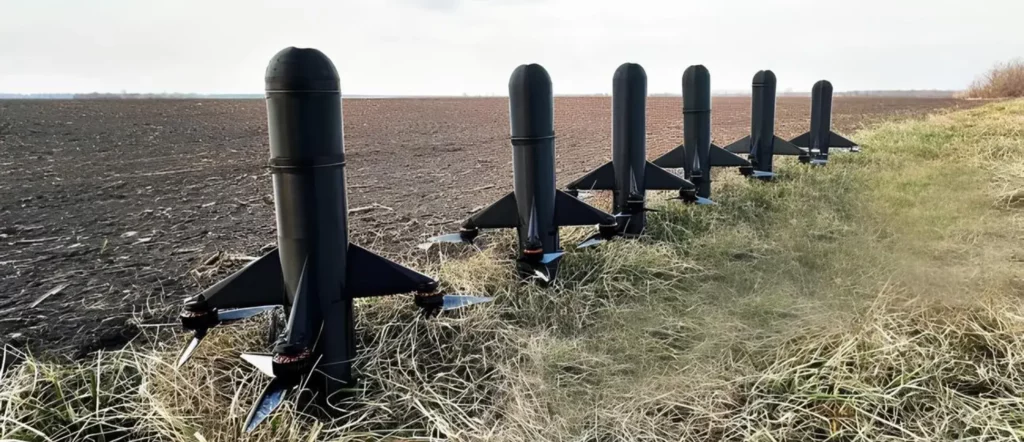
The Merops anti-drone system comprises a ground control station, launcher infrastructure, and a fleet of Surveyor interceptor UAVs that use onboard sensors and AI navigation to intercept enemy drones. Each interceptor is significantly more cost-effective than many traditional missile systems, priced at approximately $15,000, offering a competitive value proposition for defence planners seeking scalable counter-UAV solutions. The operational affordability of Merops, compared with conventional defence procurement options, has drawn interest from both military customers and the investors backing its development ecosystem.
Merops has demonstrated considerable field applicability, having been deployed by Ukrainian forces to counter aerial threats, where it reportedly intercepted hundreds of hostile drones. This performance helped drive NATO interest and contributed to decisions among alliance members to acquire the system for eastern flank or regional defence postures. Although government procurement itself isn’t traditionally characterized as a private funding round, the security purchases represent substantial financial commitments that help sustain and expand production of the technology developed under Schmidt-backed Project Eagle.
The financial and strategic participation of high-profile investors like Schmidt—combined with direct defence contracts from national governments—puts Merops at the intersection of private capital and public sector funding. As the geopolitical environment in Europe remains focused on countering evolving airborne threats, Merops stands as a high-impact example of how venture-backed technology can transition into critical defence infrastructure. The system’s funding narrative, while more opaque than standard startup financing rounds, reflects the ways in which modern defence innovation often receives hybrid forms of investment, both from seasoned tech investors and military procurement budgets.
Looking ahead, Merops’ continued adoption and any future disclosures about its financial backing or commercial partnerships will be closely watched by defence analysts and investors alike, as the boundary between venture capital and national security spending continues to blur.