Buildroid.ai Raises $2 Million to Launch AI-Powered Construction Robotics

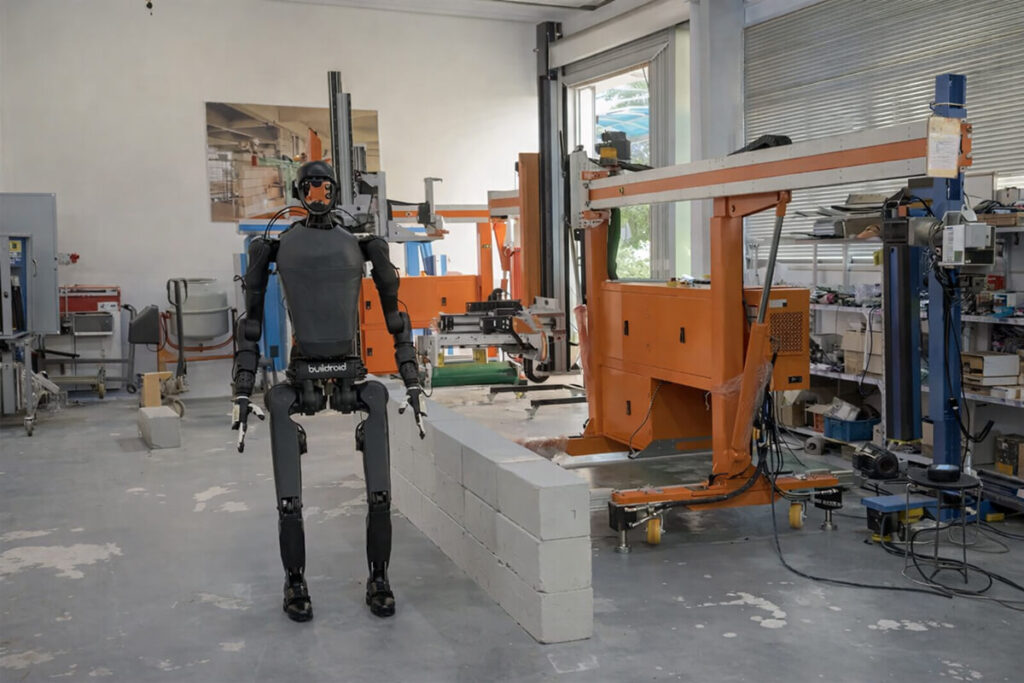
Buildroid.ai, a robotics and artificial intelligence startup focused on transforming construction workflows, has raised $2 million in pre‑seed funding as it emerges from stealth and prepares to scale its simulation‑first robotics platform. The funding round is a strategic early-stage investment that will help the company expand pilot programs, enhance its AI simulation capabilities, and advance commercial deployment of autonomous construction robots.
The pre-seed round was led by Tim Draper, a prominent Silicon Valley venture capitalist known for early backing of high-profile tech companies including Tesla, SpaceX, Skype, and Robinhood. Draper’s participation underscores confidence in Buildroid’s vision of applying advanced artificial intelligence and robotics to one of the world’s most labor-intensive and traditionally manual industries.
Founded in 2025 by Slava Solonitsyn and Anton Glance, Buildroid.ai integrates specialized and general-purpose robots directly into contractor workflows by combining Building Information Models (BIM) with AI-driven digital twin simulation technology. This “BIM-to-BUILD” approach enables the company to virtually plan, test, and optimize robotic construction workflows before deploying machines on actual job sites, aiming to improve productivity and reduce execution risk.
The startup first unveiled its technology at the Big Five Construction Conference in Dubai, where it introduced its first block-laying robot capable of autonomously building interior partition walls — a task typically requiring significant manual labor. This launch coincided with the company’s funding announcement and reflects Buildroid’s initial commercial focus on automating labor-intensive segments of the UAE construction market.
Buildroid will use the new capital to expand its pilots with major general contractors in the UAE and beyond. In addition to refining its simulation engines and autonomous control systems, the company plans to accelerate the rollout of its robotic solutions for broader construction workflows, including interior fit-outs and more complex on-site tasks. Buildroid’s strategy is to deliver coordinated multi-robot crews that can handle end-to-end workflows rather than isolated tasks, enabling higher utilization and throughput compared with single-function machines.
The company’s simulation-first methodology is powered in part by partnerships with technology providers such as Nvidia, whose Omniverse digital twin platform Buildroid leverages to evaluate and optimize robotic workflows before real-world deployment. This simulation layer is a core differentiator for Buildroid, as it aims to reduce the trial-and-error traditionally associated with construction robotics and ensure viable economics for contractors prior to hardware activation on site.
Beyond its inaugural block-laying platform, Buildroid’s long-term vision is to evolve into a broader construction robotics ecosystem that integrates multiple robot types under a unified orchestration framework. The company’s platform-agnostic approach is designed to support robot fleets from different vendors, enabling contractors to deploy a range of machines in concert — from material delivery bots to advanced finishing systems — all managed through a central AI-driven orchestration layer.
Buildroid’s launch and funding come amid growing interest in automating construction, a sector that has historically lagged behind others in adopting robotics due to variability in tasks, complex environments, and high barriers to integration. By using digital simulation to de-risk deployments and optimize workflows, Buildroid is positioning itself as a possible catalyst for broader industry transformation, helping contractors address chronic labor shortages and productivity challenges while improving safety and precision on job sites.
The company also announced plans to deploy its first commercial AI-powered robotic teams in the United States starting in early 2026, leveraging lessons learned from its UAE pilots and tailoring its platform for broader global markets. These go-to-market efforts will be supported by the recently raised capital, laying the groundwork for Buildroid to move from early pilots to scalable revenue-generating operations.
As Buildroid.ai scales its operations and technology, the backing of investors like Tim Draper not only provides financial resources but also strategic validation for the startup’s ambitious aim to bring general-purpose robotics and AI into mainstream construction workflows, potentially reshaping how buildings are constructed in the decades ahead.