
Antioch Raises $4.25M Pre-Seed to Revolutionize Robotics Testing with Cloud Simulation Platform

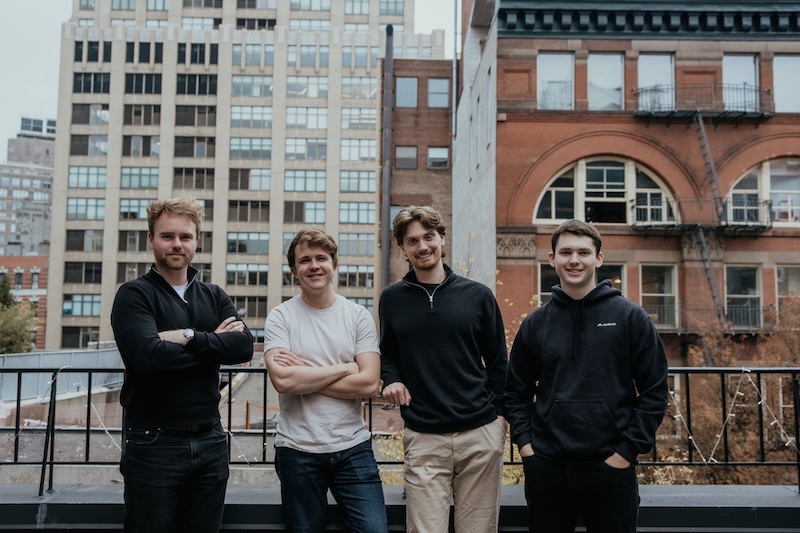
Antioch, the New York–based robotics software startup, has raised $4.25 million in a pre‑seed funding round to accelerate the development of its cloud simulation infrastructure designed to help robotics and autonomous systems teams test, validate, and deploy AI‑driven systems entirely in software before hardware ever leaves the lab. The funding, announced in December 2025, represents a significant early milestone for the company, which was founded earlier this year by a team of Stanford alumni and autonomy veterans including former Tesla Autopilot engineer Harry Mellsop, former DeepGrey Research head of product Alex Langshur, former Google DeepMind engineer Colton Swingle, and former Meta Reality Labs researcher Collin Schlager.
The round was led by A* Capital, a venture firm focused on early‑stage deep technology companies, which took a leading role in supporting Antioch’s vision of making high‑fidelity robotics simulation accessible to teams of all sizes.
Alongside A*, a cadre of prominent venture investors participated in the financing, including Abstract Ventures, known for backing foundational technology companies; MaC Venture Capital, a firm that invests in early‑stage startups at the intersection of technology and societal transformation; BoxGroup, a seed‑stage investment firm with a track record of supporting groundbreaking tech startups; and Icehouse Ventures, a New Zealand‑based investor with a global portfolio. Angel investors also joined the round, including Adrian Macneil, CEO of Foxglove, and Shyam Sankar, Chief Technology Officer of Palantir Technologies.
Antioch’s platform targets one of the most challenging bottlenecks in robotics development: safely and efficiently validating autonomous systems in a way that mirrors real‑world conditions. Traditionally, robotics teams have relied on costly and time‑consuming physical testing, involving repetitive manual resets, dedicated hardware facilities, and bespoke environments. Antioch’s cloud simulation infrastructure instead lets developers spin up thousands of digital twins — high‑fidelity virtual replicas of robots and their operating environments — all within software. This approach allows for parallel testing, rapid iteration, and integration with continuous integration/continuous deployment (CI/CD) workflows, dramatically reducing development cycles and costs.
By enabling robotics engineers to conduct extensive testing in virtual environments, Antioch aims to democratize access to what its founders describe as “Tesla‑level infrastructure,” a reference to the sophisticated internal simulation tools used in the development of automotive autonomy at Tesla. The company’s technology addresses a broad spectrum of robotic use cases, including warehouse automation, mobile robotics, smart security systems, and autonomous construction equipment, making it appealing to both startups and established enterprises tackling complex autonomy challenges.
Antioch’s team draws on deep experience building and scaling simulation platforms. Mellsop’s work on Tesla’s Autopilot vision systems, Swingle’s leadership in large‑scale validation projects at Google’s DeepMind, and Schlager’s research at Meta Reality Labs have all informed the company’s approach to creating software‑centric testing tools. The founders say that traditional physical testing environments are inefficient and often out of reach for smaller teams, pointing to anecdotes such as companies renting Airbnbs or constructing bespoke mock environments simply to test iterations of robotic hardware. According to the Antioch leadership, moving these processes to software not only accelerates development but also enhances safety and performance validation before any real‑world deployment.
In addition to its commercial aspirations, Antioch’s platform is positioned as a key enabler for the future of autonomous infrastructure development, where rapid iteration and robust validation are critical for deploying complex AI systems. The company has already begun collaborating with leading robotics and autonomy teams, including several Fortune 500 companies, integrating its simulation tools into real‑world development pipelines and helping customers streamline their testing workflows. These early partnerships reflect both the market demand for scalable simulation tools and Antioch’s potential to influence how autonomous systems are engineered and validated.
The newly secured funding will be used to expand the company’s engineering and product teams, further enhance its simulation capabilities, and accelerate commercial deployment of its cloud‑based platform. Antioch expects to continue building out its technology stack, deepen integrations with existing development tools, and support a growing roster of autonomy developers as it prepares for broader market adoption.
With its $4.25 million pre‑seed funding round now closed, Antioch is poised to tackle one of the most persistent barriers in robotics and autonomous systems — the ability to validate complex AI behaviors safely, efficiently, and at scale — and could play a foundational role in advancing the next generation of autonomous technology.


