Proxima Fusion Raises €130 Million Series A to Build World’s First Stellarator-Based Fusion Power Plant


Proxima Fusion, a Munich-based fusion energy company, has raised €130 million (around US$150 million) in a Series A funding round, marking the largest private investment in fusion energy in Europe to date. The new financing will accelerate the company’s efforts to build the world’s first stellarator-based fusion power plant in the 2030s.
The round was co-led by Cherry Ventures and Balderton Capital, with participation from UVC Partners, the DeepTech & Climate Fonds (DTCF), Plural, Leitmotif, Lightspeed, Bayern Kapital, HTGF, Club degli Investitori, OMNES Capital, Elaia Partners, Visionaries Tomorrow, Wilbe, and redalpine. The new investment brings Proxima Fusion’s total funding from both private and public sources to more than €185 million (approximately US$200 million).
Founded in 2023 as a spin-out from the Max Planck Institute for Plasma Physics (IPP), Proxima Fusion aims to commercialize fusion energy using a stellarator design—a magnetic confinement device known for its steady-state plasma operation and inherent stability. The company’s approach combines advanced simulation-driven design with cutting-edge materials and high-temperature superconductors (HTS) to build next-generation fusion reactors capable of sustained energy output.
The funding will be used to accelerate development of the company’s key milestones, including the Stellarator Model Coil (SMC), which is expected to be completed by 2027. The SMC will serve as a critical prototype to validate Proxima’s HTS magnet technology. Following this, the company plans to develop its first demonstration device, called Alpha, which aims to achieve net energy gain—producing more energy from fusion than is consumed—by around 2031.
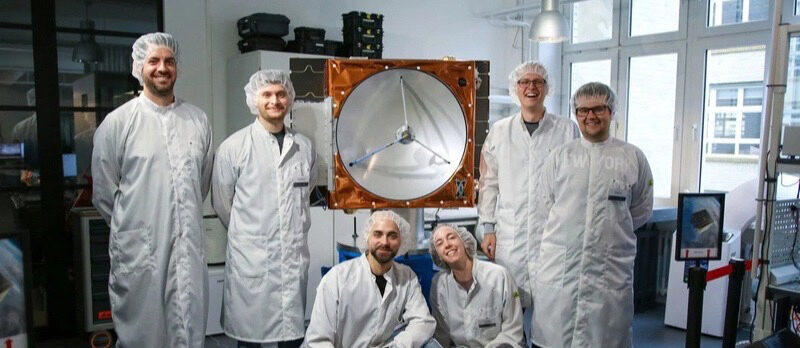
To support these goals, Proxima Fusion is expanding its team and infrastructure. The company now employs about 100 people across engineering, research, and manufacturing disciplines and plans to continue hiring as it scales. It has begun producing and testing components for the SMC, including magnet structures and HTS cable assemblies, while also developing its own cable manufacturing line and prototype vacuum vessel components.
Proxima’s longer-term roadmap involves selecting a site for the Alpha stellarator and establishing partnerships for industrial-scale manufacturing. The company’s leadership, including co-founders Francesco Sciortino (CEO) and Lucio Milanese (COO), has backgrounds in plasma physics, fusion engineering, and computational modeling. The founding team also includes experts from institutions such as MIT, Harvard, Tesla, and McLaren, reflecting a blend of scientific and industrial expertise.
Proxima Fusion’s technology is based on a quasi-isodynamic stellarator configuration, an advanced design that aims to combine the stability advantages of stellarators with confinement properties comparable to those of tokamaks. The design minimizes plasma turbulence and energy loss, potentially enabling continuous operation—an important feature for a commercial fusion power plant. The integration of HTS magnets further improves efficiency, reducing power consumption and simplifying reactor design.
The Series A funding extension announced later in 2025 added another €15 million, bringing Proxima’s total financing to around €200 million (about US$230 million). The company is channeling these resources toward scaling its hardware development, expanding its industrial partnerships, and de-risking the technologies required for full-scale fusion energy production.
Fusion energy has long been seen as a potential game-changer in the clean energy transition. By replicating the same energy process that powers the sun, fusion offers the promise of abundant, carbon-free, and virtually limitless power. However, realizing practical fusion energy has remained one of the most difficult engineering challenges in modern science. Proxima Fusion’s approach, focusing on advanced stellarator design and manufacturable superconducting magnet systems, could position it as a leading contender in the global race to achieve commercial fusion.
With significant investor backing, a strong technical foundation, and growing industrial capabilities, Proxima Fusion is rapidly emerging as a European leader in the effort to make fusion energy a viable power source. The company’s goal of deploying the first stellarator-based fusion power plant within the next decade reflects a broader acceleration in fusion innovation, signaling renewed optimism for achieving net-positive, scalable fusion energy.